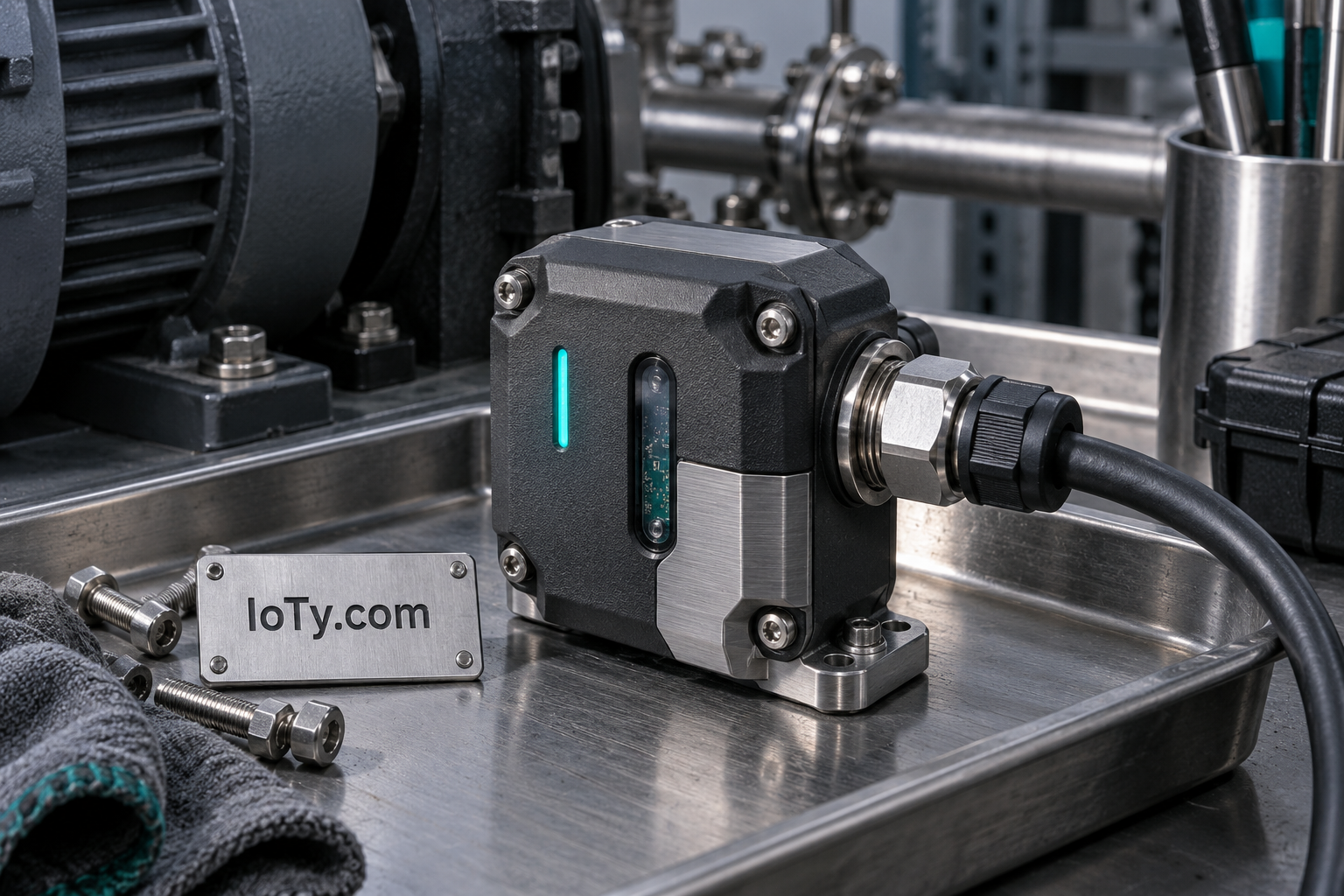
Industrial monitoring begins with a question someone needs answered on a shift. Is a reading current? Which unit stopped reporting? Who should inspect an unexpected change? IoTy.com could serve as the public identity for a focused monitoring suite that connects sensors, gateways, and the people responsible for a facility. Its category association can establish the field quickly while a specific product description explains the operational job.
This illustrative concept starts with maintenance teams at smaller facilities that need a consistent view of a limited set of noncritical conditions. The opening offer should be narrow enough to evaluate alongside existing procedures. The monitoring product, its suitability, and every measurement would require real engineering and validation. The name and imagery do not establish an operating system or a safety function.
Pick a decision before choosing a chart
An early buyer conversation could focus on an equipment room where staff take periodic manual readings. Ask what happens after the reading is written down. Does someone compare it with yesterday, arrange an inspection, or attach it to a service record? The first workflow should support one of those decisions. A chart without an agreed response can add another screen to watch without making anyone's responsibility clearer.
For a worked scenario, imagine a facilities supervisor reviewing a daily list of sensors whose readings need attention. Each entry would show the observation time, the location, and the next person responsible. A stale observation would be labeled as stale, rather than presented as a normal current value. The design question is how the supervisor decides what to check, not how many colors can fit into a status panel.
Scope a pilot around one location
A useful pilot agreement would name the area, devices, installation method, network assumptions, and duration. It would also identify who can approve physical work and when access is possible. Photograph and document the installation positions so the evaluation can distinguish a software issue from a moved sensor or an interrupted power supply. Keep the pilot small enough that every unexpected result can be investigated.
Before installation, agree what counts as useful evidence. That could include a verified device inventory, traceable timestamps, a successful disconnected-network test, and a report the facility can export. These are proposed acceptance checks, not benchmark results. The buyer should bring its own operational requirements and decide which checks are mandatory for the intended environment.
Respect the existing network
A plant or building network has people responsible for access and change control. Bring those people into the discussion before hardware arrives. Document required destinations, ports, credentials, and update behavior. If a gateway buffers readings during an interruption, test how it labels and sends them when connectivity returns. A delayed reading should carry enough context for an operator to understand when the underlying event occurred.
The OASIS MQTT standard can inform the message transport portion of a design. Its delivery mechanisms do not by themselves define an alarm policy or establish the accuracy of a sensor. Those responsibilities remain with the application and the equipment. Keep the transport description separate from the business rules that turn observations into work.
Make handoffs part of the product
A monitoring suite could earn its place by helping an observation reach the right person with enough context to act. Decide who acknowledges a notice, how a shift change transfers responsibility, and where the eventual outcome is recorded. If the buyer already has a maintenance system, an export or integration may be more useful than asking everyone to adopt a new task list.
Commercial packaging should reflect that scope. An initial offer might cover a defined installation and a monitoring service, with separately described hardware replacement and support terms. The team would need to understand its installation effort and ongoing costs before setting any pricing. The domain opportunity does not depend on invented savings or a promised return on investment.
Distribute through people who know the site
A specialist installer or facilities integrator could be a credible route to early evaluations. That partner already understands access constraints and the equipment in question. Give them a concise installation guide, a compatibility list, and a clear escalation route. Agree which party answers questions about the sensor, network, and application so the customer does not have to diagnose the supplier relationship.
The NIST IoT cybersecurity baseline is useful when organizing device capability questions for that handoff. Turn the relevant topics into specific questions for the proposed equipment and environment. Record what was tested, what remains unknown, and who owns the answer. A reference framework should support diligence, rather than become a decorative claim on the product page.
Expand only where the operating model holds
After an evaluation, review installation effort, false or unhelpful notices, support calls, and the buyer's actual use of reports. A second facility may have different network rules or staffing. Treat those differences as part of the product scope before repeating the offer. A monitoring business needs a repeatable service boundary as much as reusable software.
IoTy.com leaves room to organize that offer by facility type or monitoring application as evidence develops. A prospective buyer can inquire with a description of the intended use, target customer, and acquisition or partnership plan. The clearest starting point is a real operational question the proposed business would help someone answer.