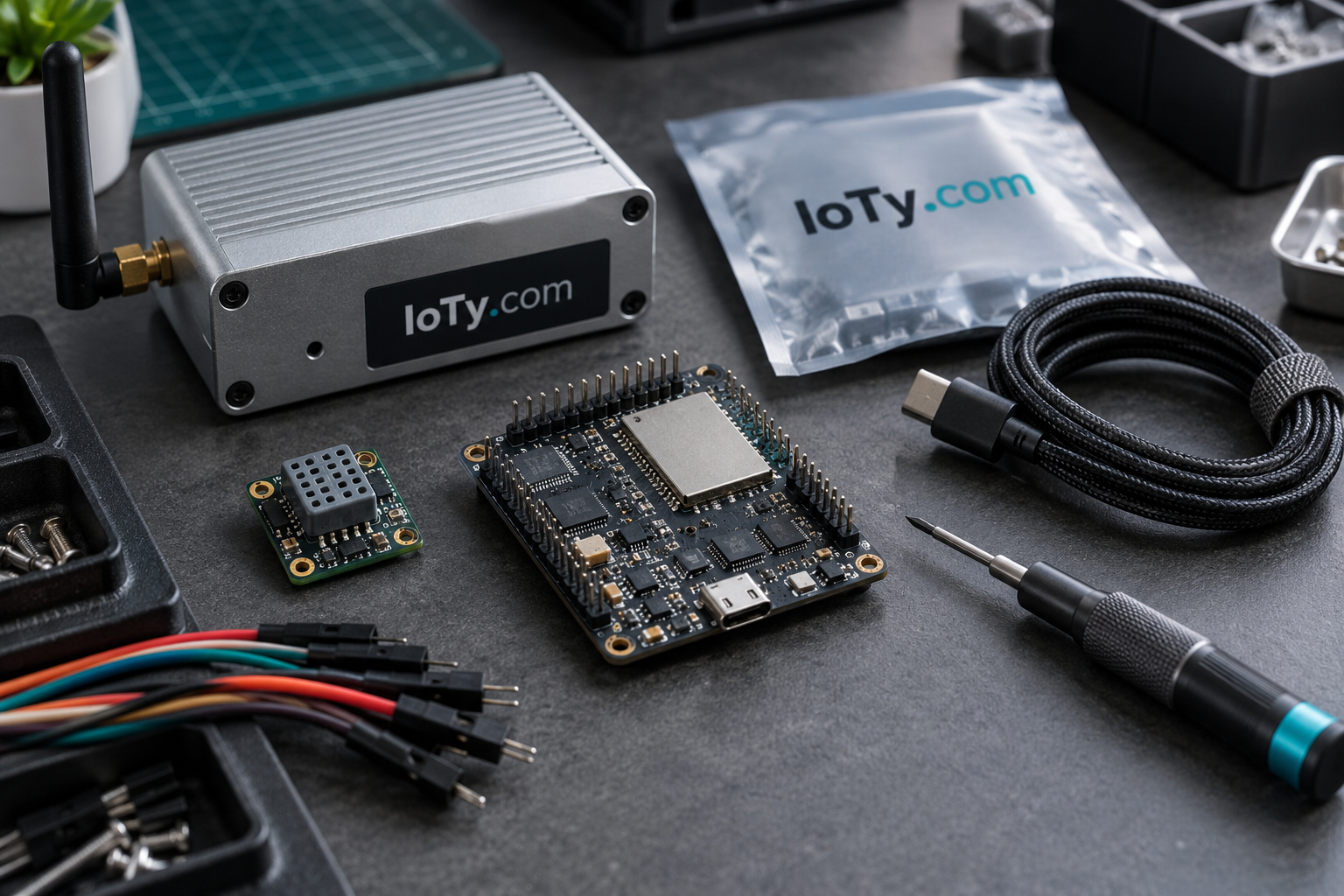
Developer tools are often introduced through a link in a technical conversation. Someone has a problem, another person shares a guide, and the product gets a few minutes to prove useful. IoTy.com could be the public address for an IoT developer-tools brand built around that moment. The name signals connected technology, while clear documentation would explain the exact task the tool handles.
This is an illustrative direction for an SDK, command line interface, or gateway development kit. A strong first audience would be embedded and application developers who need to reproduce device messages without waiting for a full hardware installation. That is a different buyer job from running a production device cloud. The opening promise should describe a development workflow the team can test in a clean environment.
Give the first command a useful result
Consider a toolkit that replays a recorded sensor event stream into a local test application. A developer could install it, select a sample, and see a documented output. The guide should show the expected result before introducing optional configuration. A useful first command has a clear stopping point: the reader can tell that it worked and understands what happened.
Keep the sample small enough to inspect. Explain each field, include timestamps that are clearly examples, and avoid requiring production credentials. If a hosted account is necessary, say so before installation. The developer should know what leaves the machine and how to remove the tool and any created resources after the trial. A tidy cleanup command is part of a respectful first experience.
Choose between a library and a service
An SDK installed inside customer software brings versioning, compatibility, and release responsibilities. A hosted testing service brings account administration, availability, and data handling responsibilities. Both can be worthwhile businesses, but the first product page should identify which one is being offered. If there is an open component and a paid hosted layer, explain the boundary with concrete features.
For example, local event playback could be available as a downloadable tool, while shared test runs and team history could form a hosted offer. That is a product packaging illustration, not a pricing recommendation. The useful question is whether the paid layer serves a recurring team need that is distinct from the individual's first successful experiment.
Document the edges, not only the happy path
Developers need to know what happens with missing fields, old message versions, duplicate events, and lost connections. A reference page should distinguish guarantees from examples. The MQTT specification from OASIS is a relevant source when the toolkit handles MQTT messages, but the documentation must still explain its own implementation choices and supported versions.
Create a small set of failure examples that readers can run intentionally. A malformed event should produce a useful error with enough context to fix the input. A connection failure should identify the stage that failed without exposing credentials. These details make documentation useful during actual work, when the reader is usually trying to resolve a problem rather than admire a feature list.
Use documentation as the first distribution channel
A focused technical article can introduce the tool through a task people already face. One guide might show how to reproduce an intermittent sequence using a saved event file. Another might compare expected output before and after a schema change. Publish the accompanying sample and explain the environment so readers can repeat the result rather than take a claim on trust.
Developer communities can be a sensible place to share that work when the contribution fits the discussion. Answer the technical question directly, identify the author's connection to the tool, and include a useful explanation outside the product link. A distribution plan should be based on repeatable help, not assumed repository popularity or invented adoption numbers.
Treat maintenance as part of the offer
A tool enters someone else's build process. That makes release notes, version pinning, and deprecation notices part of the product. Decide how long old versions remain available, which environments receive testing, and how breaking changes are announced. A concise compatibility table can save a reader from discovering a limitation after integrating the package into a larger project.
Security questions deserve the same specificity. Document how the tool reads credentials, whether it writes logs, and how users can report a suspected issue. The NIST device cybersecurity baseline provides useful background for tools that interact with device identity, configuration, or software updates. It does not certify a library; the tool's actual behavior needs its own tests and documentation.
Make the repository and the business agree
If part of the project is open source, choose a license deliberately and make the supported contribution process easy to find. Clarify which releases are maintained by the business and which integrations are community contributions. A developer evaluating dependency risk needs to understand that distinction before adopting the tool for work that will outlast a short experiment.
IoTy.com could bring the docs, downloads, release history, and commercial offer under one address. It would suit a founder who already knows the first developer task and wants a public name with room for adjacent tools. To start an acquisition conversation, describe the product shape and intended audience. For a partnership, explain the operating contribution and how the first useful release would be delivered.